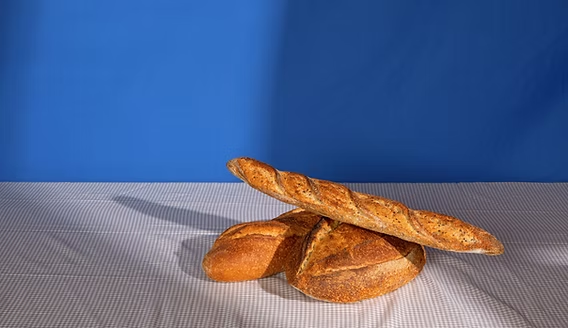
When travelers think of European bread, the iconic French baguette often steals the spotlight. However, venturing beyond the baguette reveals a continent-spanning tapestry of baking traditions, where every crust tells a story of geography, history, and local soul. From the dense, dark ryes of the Baltic to the sun-kissed, olive-oil-infused flatbreads of the Mediterranean, European crusts are more than just accompaniments; they are cultural pillars. Understanding these “untold stories” allows us to appreciate how humble flour and water have been transformed by centuries of regional craftsmanship into masterpieces of texture and flavor.
1. The Heritage of German Pumpernickel
Authentic Westphalian Pumpernickel is a masterclass in patience. Unlike airy loaves, it is steamed for up to 24 hours. This slow process caramelizes the natural sugars in the rye, creating a deep, chocolate-colored crumb and a crustless, earthy density that is uniquely nutritious.
2. Italy’s Ancient Pane di Altamura
Hailing from Puglia, this is the only bread in Europe with a PDO status. Made from durum wheat flour, its distinct yellow hue and thick, crunchy crust were designed for shepherds. It stays fresh for weeks, serving as a resilient staple for long mountain journeys.
3. The Smoky Secrets of Icelandic Rugbrød
In the geothermal regions of Iceland, bakers bury pots of rye dough in the hot ground. The earth’s natural heat “bakes” the bread over 24 hours. The result is a cake-like, sweet, and crustless bread that tastes like the volcanic landscape itself.
4. France’s Rustic Pain de Campagne
While the baguette is for daily snacking, the Pain de Campagne is the heart of the French countryside. This sourdough boule uses a mix of white and whole wheat or rye, producing a thick, charred crust that protects the moist, tangy interior.
5. The Decorative Saffron Buns of Sweden
Known as Lussebullar, these vibrant yellow buns are a winter solstice tradition. Infused with expensive saffron and shaped into “S” curves, they represent light in the dark Scandinavian winter. Their soft, golden exterior is as much a visual feast as a culinary one.
6. Poland’s Street Food Icon: Obwarzanek Krakowski
Before the modern bagel, there was the Obwarzanek. This ring-shaped bread from Krakow is boiled before baking, resulting in a dense, chewy texture. Topped with salt, poppy seeds, or sesame, it has been a protected local treasure since the 14th century.
7. The Airy Majesty of Portuguese Papo-Secos
These traditional “hard rolls” are the foundation of Portuguese sandwiches like the bifana. They feature a thin, shatteringly crisp crust and a hollow, airy center. Their unique shape is achieved by “punching” the dough with the side of the hand before baking.
8. Greece’s Sacred Horiatiko Psomi
Literally “country bread,” this Greek staple is dense and crusty. It is traditionally baked in wood-fired ovens, which imparts a subtle smokiness. Made with yellow sheep’s milk butter or olive oil, it is the perfect vessel for soaking up Mediterranean salads.
9. The Fermentation Magic of Irish Soda Bread
Irish soda bread skipped the yeast in favor of baking soda and buttermilk. Historically, the “cross” cut into the top wasn’t just for decoration; it was believed to “let the fairies out,” though it practically helped the thick crust expand evenly.
10. Switzerland’s Braided Zopf
Typically eaten on Sunday mornings, Zopf is a buttery, egg-washed braid. Its glossy, golden-brown crust and soft, brioche-like texture make it a centerpiece of Swiss breakfast. The intricate braiding technique is a skill passed down through generations of home bakers.
11. The Salty Crunch of Bavarian Pretzels
The secret to the iconic mahogany crust of a German Brezel is a lye bath. Dipping the dough in an alkaline solution before baking creates a chemical reaction that produces a shiny, salty, and uniquely flavored crust that contrasts with the soft interior.
12. Spain’s Crystal-Like Pan de Cristal
Hailing from Catalonia, “Glass Bread” is defined by its extreme hydration. The dough is so wet it is almost impossible to handle, resulting in a crumb that is mostly air and a crust so thin and brittle it shatters like glass.
13. The Hearty Rye of Finland: Ruisleipä
Finnish rye bread is 100% whole grain and often shaped into a flat ring with a hole in the middle. Historically, these were hung on poles near the kitchen ceiling to dry, ensuring a year-round supply of high-fiber, long-lasting sustenance.
14. Austria’s Seed-Topped Kornspitz
The Kornspitz is a modern European success story. Developed in the 1980s but based on traditional grain blends, this spiced, seeded roll offers a high-fiber alternative to white rolls. Its crust is packed with linseeds, wheat grit, and rye flour.
15. The Georgian Influence: Khachapuri Crusts
While Georgia sits at the crossroads of Europe and Asia, its bread culture is legendary. The boat-shaped Adjaruli Khachapuri features a thick, bread-stick-like crust designed to be torn off and dipped into a molten center of cheese, butter, and egg.
16. Turkey’s Sesame-Crusted Simit
Often called the Turkish bagel, Simit is encrusted in toasted sesame seeds and molasses. This gives the crust a sweet, nutty, and deeply crunchy profile. It’s the ultimate street food, sold from red carts across Istanbul every morning.
17. The Sourdough Renaissance in San Francisco via Europe
While famous in America, the “sour” tradition traces back to European immigrants. The thick, blistered crust of a sourdough loaf is a sign of long fermentation, which breaks down gluten and creates a complex flavor profile that modern bread lacks.
18. Malta’s Iconic Ftira
This ring-shaped leavened bread is a staple of Maltese cuisine. It is traditionally hand-shaped and baked at high temperatures to achieve a very tough, dark crust. It is typically sliced and filled with sardines, potato, capers, and olives.
19. The Dutch Tiger Bread (Tijgerbrood)
Known for its unique mottled crust, Tiger Bread gets its look from a rice paste spread over the dough before baking. As the bread rises, the paste cracks, creating a “leopard” or “tiger” pattern that adds an incredible toasted crunch.
20. Czech Vianočka: The Christmas Spirit
Similar to Zopf but richer, this braided bread contains raisins and almonds. It is a symbol of fertility and prosperity. The complex layers of the braid represent the Christ child wrapped in swaddling clothes, encased in a sweet, golden crust.
SEO Meta Description
Discover the untold stories of European crusts! Go beyond the baguette to explore 20 unique regional breads, from German rye to Italian sourdough and more.
Focus Keywords
- European crusts
- Beyond the baguette
- Traditional European bread
- Regional baking traditions
- Artisan sourdough techniques
- European bread history
- Crusty bread varieties
FAQ Section
Q: Why do European breads have a harder crust than American breads? A: Many European breads use lean doughs (just flour, water, salt, and yeast) and are baked in steam-injected or stone ovens. This process creates a thick, protective crust that preserves the moisture inside without the use of preservatives.
Q: Is sourdough better for digestion? A: Yes, the long fermentation process used in traditional European sourdoughs helps break down phytic acid and gluten, making the nutrients more bioavailable and the bread generally easier on the digestive system.
: How can I keep artisan bread fresh? A: Store crusty bread in a paper bag or a bread box at room temperature. Avoid plastic bags, as they trap moisture and turn the crisp crust soggy. For long-term storage, freezing is better than refrigerating.
Internal Linking Suggestions
- The Ultimate Guide to Sourdough Starters: A deep dive into maintaining your own wild yeast at home.
- Top 10 European Bakeries You Must Visit: A travel guide for bread lovers seeking the world’s best crusts.
- Wheat vs. Rye: Which Grain is Right for Your Health?: A nutritional comparison of the two most popular grains in European baking.
Conclusion
Exploring the world of bread beyond the baguette reveals a rich heritage of flavor and technique. Each European crust, whether it is the lye-dipped pretzel of Bavaria or the geothermal rye of Iceland, offers a unique window into the history and environment of its origin. By seeking out these traditional loaves, you aren’t just eating; you are participating in a delicious, centuries-old legacy. Next time you visit a bakery, look past the white rolls and try a piece of European history.
Leave a Reply